Gallery Lighting Explained: A UK Buyer's Guide
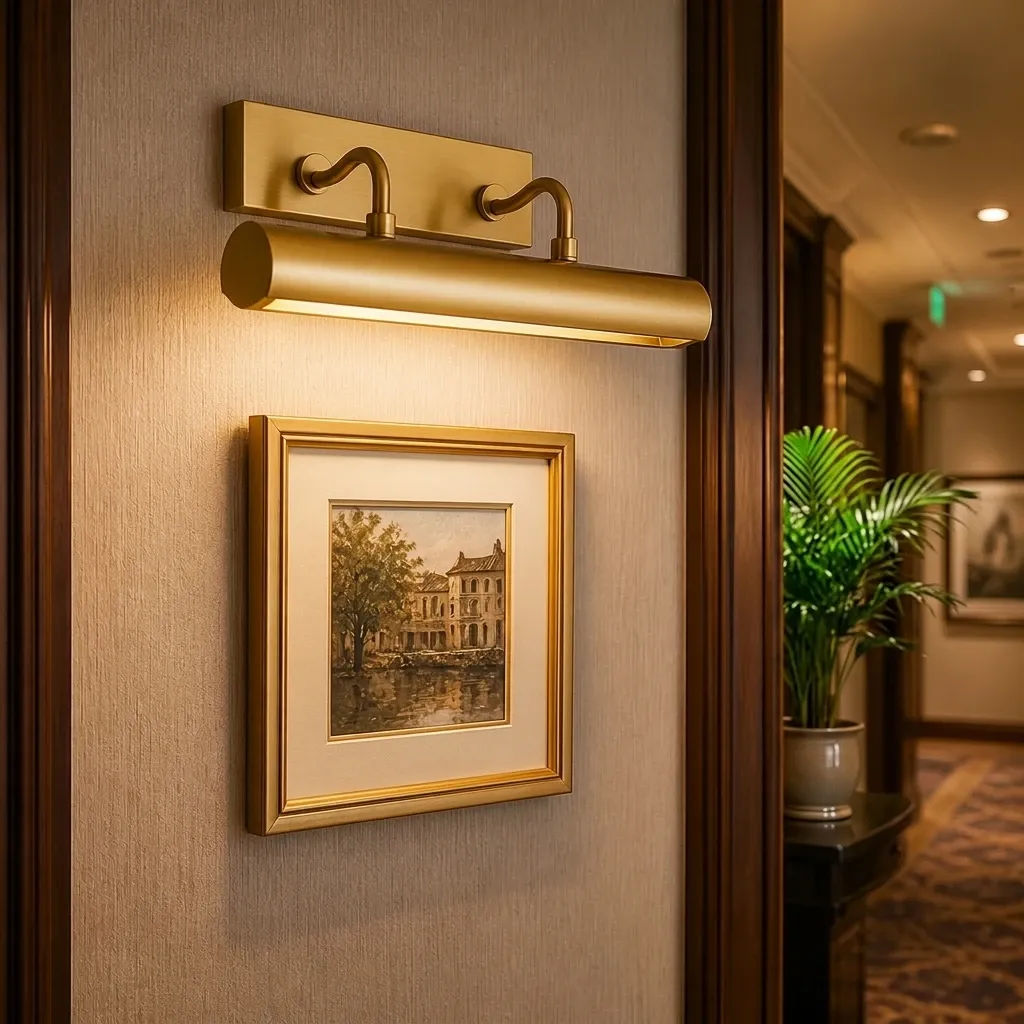
Gallery lighting is a dedicated way of lighting artwork so it appears evenly lit, colour-accurate and easy to view without glare. In most UK homes, the best gallery lighting uses a high-CRI, UV-free LED picture light positioned at roughly a 30-degree angle, with brightness matched to the artwork’s sensitivity and the room’s style.
TL;DR: Choose gallery lighting with a CRI of 90+, a warm white 2700K output for most British interiors, and careful placement to avoid reflections. For valuable or delicate art, keep to conservation-led lux levels; meanwhile, hardwired fittings offer the neatest permanent finish, while battery picture lights suit listed buildings, renters and lower-disruption installs.
Properly illuminating a piece of art is the defining difference between a house that simply displays pictures and a home that curates them. Moreover, in interior design, gallery lighting acts as both a practical and architectural tool: it draws the eye, sets the mood of a room, and reveals the textures of oil, acrylic and watercolour that general room lighting often flattens.
For decades, achieving a true museum-quality effect in a private residence required bulky, industrial fixtures. However, advances in optical engineering and LED technology now allow museum-inspired hardwired wall picture lighting to combine technical precision with aesthetic refinement. As specialists in bespoke illumination for UK interiors, we understand that choosing the right gallery light means balancing conservation, electrical regulations and architectural harmony.
This guide explains how gallery lighting works, which specifications matter most, and how to choose the right solution for your home.
What should you know before choosing gallery lighting?
- Use conservation-safe LEDs: Quality gallery lighting uses UV-free LED technology, helping to reduce avoidable damage to sensitive artworks.
- Follow the 30-degree rule: In most cases, positioning the fitting at about 30 degrees to the artwork helps minimise glare and hotspots.
- Prioritise colour accuracy: Choose a Colour Rendering Index (CRI) of 90 or above so pigments appear closer to their true colour.
- Match the fitting to the interior: Solid brass remains a classic choice for UK homes, especially in period properties and refined contemporary schemes.
- Check installation constraints: Hardwired lights usually need a qualified electrician, whereas battery options are useful in listed buildings or rented homes.
What is gallery lighting?
Gallery lighting is not simply a standard bulb inside a long fitting. Instead, it is a purpose-designed lighting solution for artwork, created to cast an even wash of light across a vertical surface. Unlike ambient lighting, which spreads broadly around a room, gallery lighting is intended to illuminate a picture clearly without creating harsh shadows, scalloping or obvious bright spots.
In professional settings, this effect is achieved through careful beam control, diffuser design and accurate LED specification. A well-made gallery light should illuminate the top, centre and bottom of a painting as evenly as possible, so the viewer notices the artwork rather than the fitting.
For homeowners, the choice often comes down to installation type. Hardwired fittings are usually the gold standard for a seamless, permanent look. That said, where wall chasing is impractical—particularly in Grade I or Grade II listed British properties—battery-operated alternatives can be a sensible solution. In these cases, exploring the ultimate guide to antique brass picture light battery options can help you achieve a tailored result without damaging original fabric.
How does gallery lighting protect artwork?
When adding focused light to valuable art, preservation should come first. Light damage is cumulative and irreversible, so the wrong fitting or excessive brightness can gradually fade pigments and weaken delicate materials. Therefore, the best gallery lighting balances visibility with restraint.
According to UK guidance used across museums and heritage settings, highly sensitive works such as watercolours, prints and textiles should be displayed at much lower light levels than oils or acrylics. This is why specification matters just as much as appearance.
What lux level is recommended for artwork in the UK?
According to CIBSE SLL Lighting Guide 8, alongside conservation standards followed by institutions such as the National Trust, the recommended maximum illuminance for highly sensitive materials is around 50 lux. For moderately sensitive works, including many oil and acrylic paintings, guidance often extends to 200 lux.
In practice, this means brighter is not always better. Based on our testing with domestic picture lights, dimmable fittings are often the easiest way to stay within a comfortable viewing range while adjusting for frame glazing, wall colour and ambient daylight.
"The challenge of gallery lighting is to make art easy to see without accelerating its deterioration. Modern LED technology has dramatically improved this balance by removing the ultraviolet and infrared output associated with older halogen fittings."
Why is CRI important in gallery lighting?
The Colour Rendering Index, or CRI, measures how accurately a light source reveals colour compared with natural daylight. For gallery lighting, a CRI of 90+ is strongly recommended. Otherwise, paintings can appear flat, muddy or noticeably different from how they were intended to be seen.
It is also worth checking the R9 value, which indicates how well a light renders deep reds. This matters especially for portraiture, florals and traditional oils, where weak red rendering can noticeably dull the composition.
What colour temperature is best for gallery lighting?
For most British interiors, 2700K warm white is the preferred colour temperature for gallery lighting. It complements antique and contemporary frames alike, flatters traditional paint colours such as those from Farrow & Ball or Little Greene, and creates a warmer domestic feel than cooler commercial white light.
That said, very contemporary spaces or monochromatic photography can sometimes suit 3000K. Even so, in classic UK homes, 2700K remains the safest and most versatile choice.
What type of gallery lighting is best for the home?
The best type of gallery lighting depends on your property, the artwork itself and how permanent you want the installation to be. Broadly speaking, homeowners usually choose between hardwired picture lights and battery-operated alternatives.
Are hardwired picture lights better for gallery lighting?
For the most polished and architectural result, hardwired picture lights are usually the best option. Because they connect directly to the mains, they offer reliable performance, cleaner sightlines and easy control via wall switches or integrated systems such as Lutron or Control4.
They also avoid battery changes and can support high-quality LED arrays with excellent colour rendering. As a result, hardwired fittings are often preferred for principal rooms, stair halls, libraries and formal reception spaces.
However, new hardwired lighting in the UK must comply with Part P of the Building Regulations. Unless you are replacing like-for-like, installation will normally require a qualified electrician. This is particularly important where cabling must be chased into plasterwork or routed through solid masonry walls.
Are battery picture lights good enough for artwork?
Yes—provided you choose carefully. Battery-operated picture lights have improved significantly and can now offer dimming, remote controls and respectable battery life. Consequently, they are especially useful for renters, listed buildings, or situations where redecorating and replastering would be disproportionate.
Based on our testing, battery models work best where the artwork is modest in size, the viewing distance is shorter, and the fitting is used for a few hours at a time rather than all evening, every evening. If you are considering this route, our detailed breakdown on antique brass picture light battery options covers the main trade-offs.
How do you position gallery lighting correctly?
Even the best fitting can underperform if it is badly positioned. Therefore, placement is crucial. The aim is to light the artwork evenly while avoiding glare, visible hotspots and distracting spill onto the wall above.
What is the 30-degree rule in gallery lighting?
The 30-degree rule is a long-standing lighting principle that helps reduce glare on artwork, especially where there is glazing. In simple terms, the light should strike the picture at roughly a 30-degree angle, rather than straight on from above.
This angle usually creates a pleasing balance between visibility and reflection control. However, frame depth, glass type and viewer position can all affect the result, so minor adjustment is often needed.
How far above a picture should a gallery light be fitted?
There is no universal measurement, but a picture light is often mounted just above the frame so the beam spreads evenly across the artwork. The exact distance depends on the projection of the fitting, the size of the picture and the beam pattern.
As a rule, larger artworks need either a wider fitting or a greater stand-off from the wall to avoid a bright band at the top and fall-off at the bottom. Smaller works may benefit from a more compact fitting to keep the light contained.
How wide should a gallery light be?
For many installations, the light fitting is chosen at around half to two-thirds of the artwork’s width. This is not a strict rule, but it is a useful starting point for proportion and beam coverage. Custom sizing can produce a more exact result, especially for oversized frames, diptychs or unusually tall portraits.
What should you look for when buying gallery lighting?
If you want gallery lighting that performs well and still looks appropriate in a British home, pay close attention to specification as well as finish. A beautiful fitting is only half the equation.
- CRI: Aim for 90+ for accurate colour rendering.
- Colour temperature: 2700K suits most UK interiors.
- Dimming: Useful for conservation, mood and flexibility.
- Beam quality: Look for even distribution and reduced hotspots.
- Finish: Solid brass offers durability and timeless character.
- Installation type: Choose hardwired or battery depending on the property.
- Scale: Match the fitting width and projection to the artwork.
At Inch Brass, we favour gallery lighting that is both technically disciplined and visually restrained. In other words, the fitting should support the artwork and the room, not dominate either of them.
Is brass a good material for gallery lighting?
Yes, brass is one of the best materials for gallery lighting, particularly in UK interiors. It is durable, elegant and well suited to both period architecture and quieter contemporary schemes. Moreover, solid brass develops character over time, making it a natural choice for homes where materials are expected to age gracefully.
Warm brass tones pair especially well with traditional frames, painted joinery and heritage wall colours. They also sit comfortably alongside other architectural metals commonly found in British homes, such as aged bronze, nickel and ironmongery finishes.
Frequently asked questions about gallery lighting
What is the difference between gallery lighting and a picture light?
A picture light is a type of fitting, while gallery lighting is the broader approach to illuminating artwork properly. In practice, many domestic gallery lighting schemes use picture lights, but the result depends on the beam quality, colour accuracy, brightness and positioning.
Should gallery lighting be warm white or cool white?
For most homes in the UK, gallery lighting should be warm white, typically 2700K. This feels more natural in domestic interiors and is usually kinder to traditional décor and framed art than cooler white light.
Can gallery lighting damage artwork?
Yes, if it is too bright or uses unsuitable technology. However, modern UV-free LED gallery lighting is far safer than older halogen fittings. The key is controlling lux levels, limiting unnecessary exposure and using dimmable, high-quality fittings.
Can you use battery lights for gallery lighting?
Yes, especially where hardwiring is not practical. Battery lights are ideal for listed properties, rentals and lighter-use settings, although hardwired fittings generally offer the most consistent long-term performance.
Where should gallery lighting be placed?
Usually just above the artwork, angled to create even illumination without glare. The 30-degree rule is a strong starting point, but the final position should be adjusted for frame size, glazing and viewing angle.
Choosing gallery lighting for a refined British interior
The best gallery lighting makes artwork easier to see, preserves its character and quietly elevates the room around it. Whether you choose a hardwired brass picture light for a formal drawing room or a battery-operated option for a listed cottage, the essentials remain the same: accurate colour, careful positioning, appropriate brightness and a fitting that belongs in the space.
Ultimately, good gallery lighting should feel intentional rather than conspicuous. When chosen well, it adds the finishing layer that turns a wall-mounted picture into a properly presented work of art.
Ready to try Inch Brass?
Shop Now — £157.37