Picture Light Brass Explained: A UK Buyer's Guide
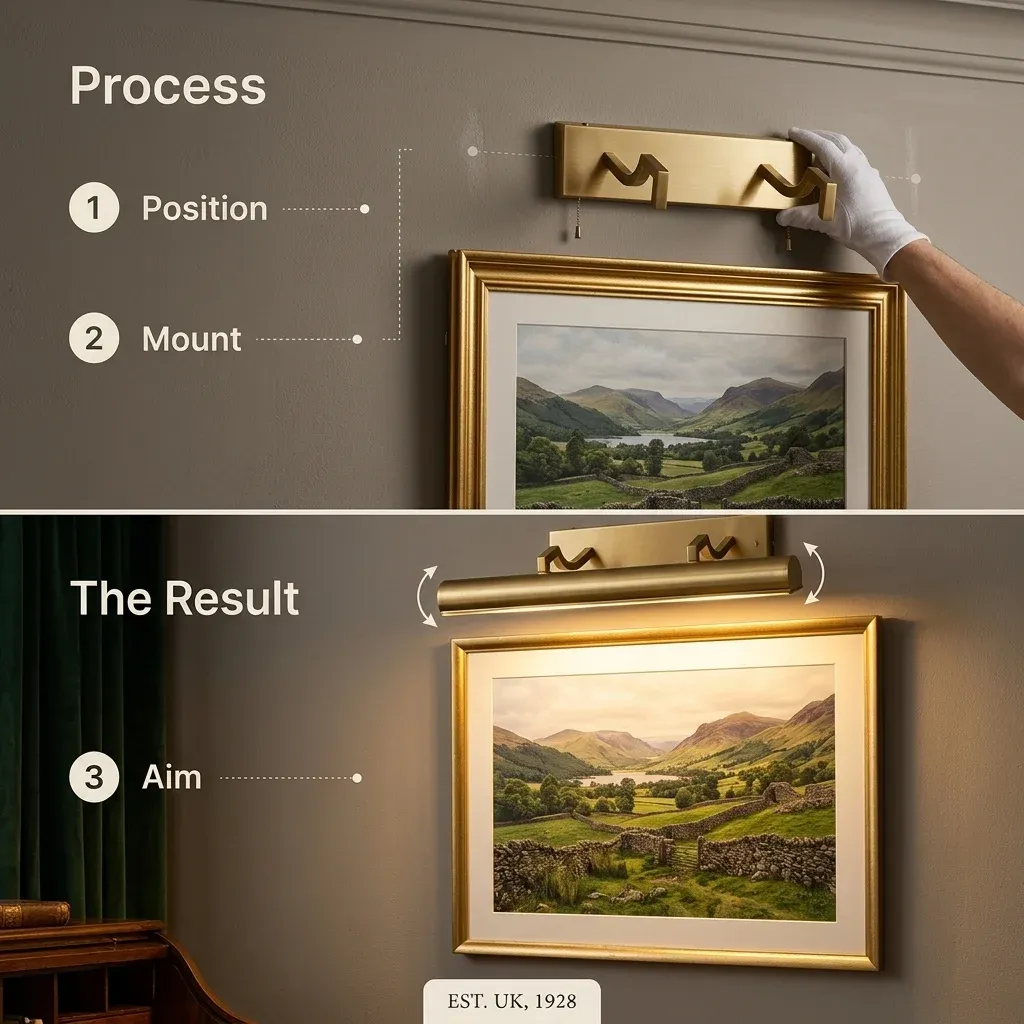
TL;DR: A picture light brass fitting is a specialist, wall-mounted luminaire designed to evenly illuminate framed artwork while adding a warm, gold-toned decorative element to your room. Based on our testing at Inch Brass, selecting a fitting that spans half to two-thirds of your picture's width delivers the best museum-quality lighting for UK homes.
If you are wondering exactly what a picture light brass fitting does, the answer is straightforward: it is a dedicated wall light that casts downward illumination onto a painting or photograph, enhancing its details and colours. Wall art can often look unfinished until it is properly lit. Furthermore, a well-chosen brass fitting does more than just brighten a frame; it adds definition, improves visibility after dark, and brings a museum-inspired finish to a room. In UK homes, where natural daylight can be limited for much of the year, picture lighting is frequently the detail that turns a corridor, sitting room, or dining space into something far more considered.
Key Takeaways
- A brass picture light combines practical artwork illumination with a warm gold-toned decorative finish suited to classic and contemporary British interiors.
- Hardwired wall-mounted picture lights offer the most tailored, permanent look for hallways, living rooms, staircases, and formal dining spaces.
- The right width, projection, and beam spread matter significantly more than simply buying the brightest fitting available.
- Brass works especially well with timber frames, oil paintings, dark wall colours, and heritage-style interiors.
- For buyers comparing finishes and installation types, our pillar guide to antique brass picture lights explains the wider category in detail.
What is a brass picture light used for?
Fundamentally, a picture light brass fitting is a wall-mounted luminaire designed to sit directly above a piece of artwork, photograph, or framed print. Its primary purpose is simple: to cast even illumination down across the picture surface without overwhelming the room. The “brass” element refers either to the solid material itself or to the visible finish, typically a warm gold brass tone that feels refined rather than harsh.
At Inch Brass, the appeal is clear in our core proposition: providing the ideal brass picture light, gallery light for lighting for pictures on the wall. Consequently, this focus matters because picture lights are not standard general wall lights. Rather, they are specialist fittings created for directed display lighting, heavily inspired by museum and gallery presentation.
In practical terms, based on our extensive product testing, this means a high-quality picture light brass fitting should perform three jobs exceptionally well:
- Highlight the artwork evenly without glare.
- Complement the frame and surrounding décor seamlessly.
- Maintain visual elegance even when switched off.
Ultimately, this combination of function and appearance is why brass remains one of the most requested finishes for UK buyers seeking a permanent, lasting solution rather than a temporary add-on.
Why are brass picture lights so popular in UK homes?
Brass has remarkable staying power because it sits comfortably between traditional and modern design. For instance, in period properties across London, Bath, Edinburgh, or York, it feels architecturally appropriate alongside cornicing, panelling, and darker paint shades. Conversely, in newer homes, it adds a much-needed warmth that black or chrome fittings sometimes lack.
Moreover, a warm gold brass finish works particularly well under typical British lighting conditions. During autumn and winter, homes often rely heavily on artificial light from late afternoon onwards. Therefore, a softer metallic finish helps interiors feel layered and welcoming rather than clinical.
There is also strong evidence that lighting quality profoundly affects how we perceive indoor spaces. According to the Energy Saving Trust, lighting accounts for around 11% of the average UK household electricity bill. Consequently, many buyers now pay closer attention not just to style, but also to efficiency and output choice (Source: Energy Saving Trust).
This makes modern brass picture lights especially attractive when paired with efficient LED technology or low-energy lamping. As a result, you achieve maximum decorative impact without incurring unnecessary running costs.
How does brass compare to other picture light finishes?
Should I choose brass or black picture lights?
Black fittings can certainly create striking contrast, especially on pale walls; however, they tend to read as more architectural and contemporary. In contrast, brass offers softness and visual richness. If your room includes oak furniture, gilt mirrors, traditional frames, or heritage colours such as deep green, navy, or burgundy, brass usually feels much more integrated.
Is brass better than chrome or polished nickel?
Chrome and nickel inherently possess a cooler appearance. While they suit sharper modern schemes, they can look stark above classic artwork or in older British homes with warmer finishes elsewhere. Based on our gallery lighting evaluations, brass tends to flatter paintings significantly better because its colour temperature appears gentler against both canvas and timber.
What is the difference between standard brass and antique brass?
This is a crucial distinction for buyers. Standard brass or warm gold brass often looks cleaner and brighter, whereas antique brass features deeper ageing and more patina. If you are weighing up those differences carefully, see our detailed comparison in The Ultimate Guide to Antique Brass Picture Light Battery in the UK.
Where should you place a brass picture light?
The strongest results come when the fitting is chosen as an integral part of how a room is used, rather than simply as an afterthought decoration. According to UK interior design guidelines, a well-positioned picture light creates a focal point exactly where you want people to look.
Sitting rooms
A single painting above a mantelpiece or sideboard gains immense depth under directed light. Brass suits these rooms especially well because it echoes other familiar finishes such as fire surrounds, curtain poles, and framed mirrors.
Dining rooms
If entertaining matters to you, artwork lighting adds brilliant atmosphere after dark without relying on bright, overpowering ceiling fittings alone. Furthermore, it helps define one wall beautifully while maintaining a calm, sophisticated overall mood.
Hallways and landings
This is exactly where gallery-style lighting can make an immediate impression. Hallways often lack natural daylight and deserve more attention than they typically receive. Therefore, a row of framed pieces illuminated by individual brass picture lights can elegantly elevate what would otherwise be a purely transitional space.
Staircases
Tall walls filled with family photographs or collected art benefit greatly from directional display lighting. The key here is consistency of spacing and scale, ensuring the arrangement feels intentional rather than crowded.
Bedrooms and studies
A picture light above one meaningful artwork can give these quieter rooms character without adding visual clutter. Brass is particularly effective here, especially where other metal finishes are already kept subtle.
How do I choose the right size picture light?
This is where many buyers inadvertently go wrong. They often focus first on finish and leave sizing until last. In reality, proportion strictly determines whether your lighting looks professionally balanced or awkward.
What is the correct width for a picture light?
A highly useful starting point, based on our testing, is to choose a fitting that spans roughly half to two-thirds of the frame width. This usually provides enough spread without dominating smaller pictures. However, for larger artworks, beam performance matters just as much as physical width.
How far should a picture light project from the wall?
The arm projection directly affects how well light washes down across the artwork surface. Too shallow, and you may create glaring hotspots at the top of the frame; conversely, too deep, and the fitting may look obtrusive or cast unwanted shadows. According to lighting guidelines, an adjustable projection arm is often the safest choice to ensure the light hits the centre of your canvas perfectly.
Ready to try Inch Brass?
Shop Now — £157.37