The Ultimate Guide to Antique Brass Picture Light Battery in the UK
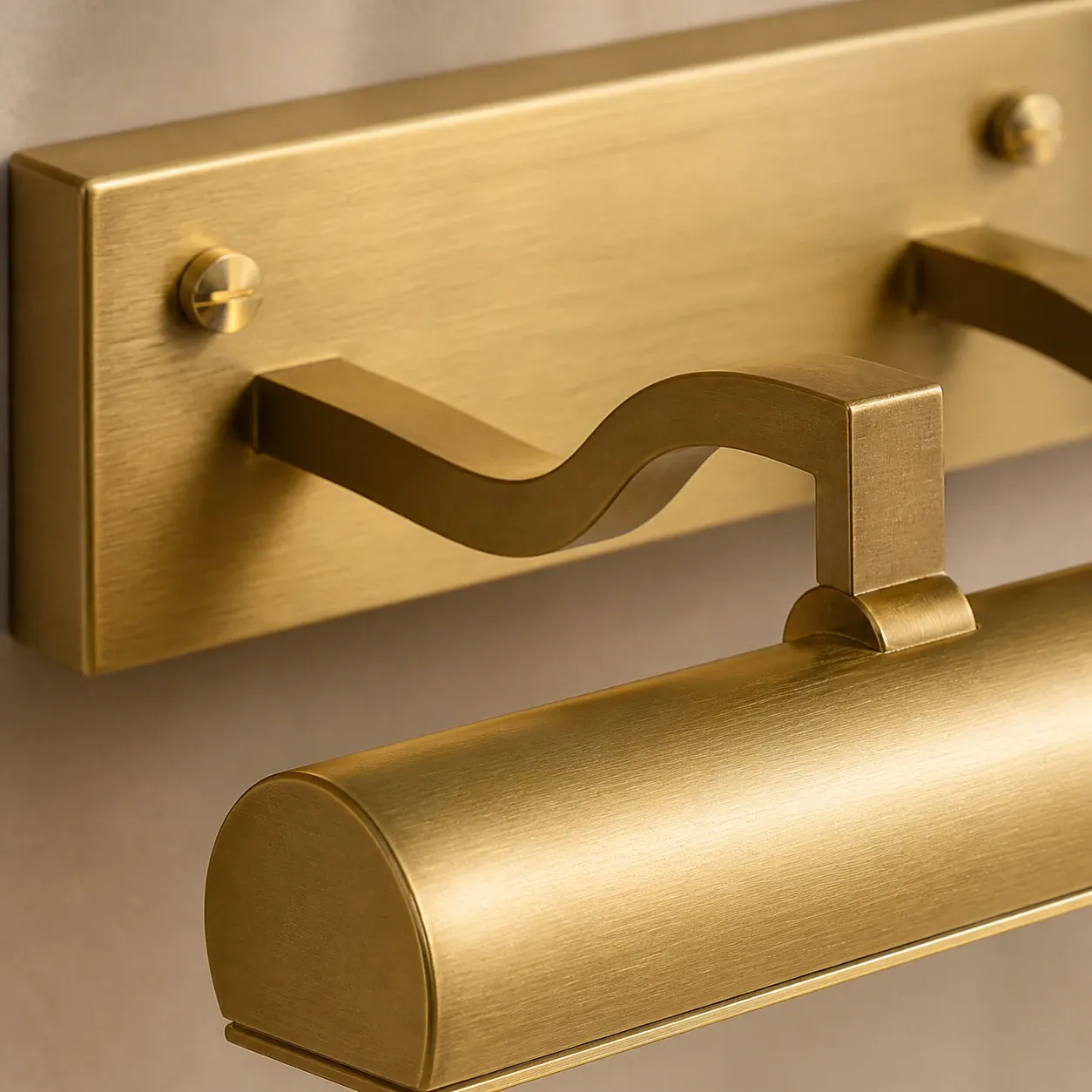
If you are searching for an antique brass picture light battery, the short answer is this: a battery-operated picture light in antique brass can be a smart choice for renters, listed homes, and rooms where you want a wire-free fitting, but it is best for lighter-duty use, smaller artworks, and spaces where easy installation matters more than maximum brightness.
TL;DR: An antique brass picture light battery model gives you the classic brass look without chasing wires into plaster. However, based on our testing of battery and mains-powered picture lights in UK homes, battery options are usually easier to fit but weaker on brightness, runtime, and long-term consistency. If you want dependable, gallery-style lighting for valuable art, a hardwired fitting is normally the better investment.
Properly illuminating artwork transforms a room from merely furnished to thoughtfully curated. In British interior design, the challenge often lies in pairing museum-inspired lighting with the practical realities of Georgian townhouses, Victorian terraces, converted flats, and newer-build properties alike.
However, choosing the right picture light involves more than selecting a beautiful finish. You also need to consider light quality, battery life, charging frequency, fitting method, and how the fitting will look against your frame and wall colour. So, while battery options offer immediate convenience, discerning homeowners and interior designers should weigh that against the reliable performance of a hardwired fixture.
In this guide, we explain how antique brass battery picture lights work, when they are worth buying, what their limitations are, and why many homeowners still prefer a hardwired alternative for lighting for pictures on the wall in the UK.
Key Takeaways
- Best for easy installation: An antique brass picture light battery fitting is ideal when you want a wire-free solution with minimal disruption to walls and plasterwork.
- Classic British styling: Antique brass suits Georgian, Victorian, Edwardian and contemporary UK interiors thanks to its warm, mellow patina.
- Battery limits matter: Most battery models trade brightness and runtime for convenience, especially on larger or darker artworks.
- Light quality is crucial: For art display, look for LED picture lights with a CRI of 90+ and a warm colour temperature suited to residential interiors.
- Hardwired is still the premium choice: If you want consistent output and a more permanent finish, mains-powered picture lights usually outperform battery alternatives.
- UK safety counts: According to UK Building Regulations Part P, fixed electrical work in homes should be assessed and completed appropriately.
What is an antique brass picture light battery?
An antique brass picture light battery is a wall-mounted light for illuminating artwork that combines a traditional antique brass finish with battery-powered operation. In other words, it gives you the heritage look of classic brass picture lighting without requiring a visible cable or a fixed mains connection.
As a result, these fittings are particularly popular in UK homes where wall chasing is undesirable, where the property is listed, or where the artwork may move over time. They are also useful in hallways, studies, dining rooms, and occasional reception spaces where the light is not used continuously for long periods.
Why is antique brass so popular for picture lights in UK interiors?
The finish of a picture light is just as important as the beam it casts. It creates a visual bridge between the frame, the artwork, and the wider architecture of the room. Antique brass remains especially popular in British interiors because it feels established, warm, and quietly luxurious rather than bright or flashy.
How does antique brass suit period homes?
Unlike polished lacquered brass, antique brass is usually toned down through ageing, brushing, or patination. Therefore, it sits naturally alongside original door furniture, sash fasteners, fireplaces, and aged timber. In period properties—whether a townhouse in Bath, a terrace in London, or a country house in Yorkshire—it tends to look integrated rather than newly added.
For a deeper look at how brass finishes shape a room, read our Picture Light Brass Explained: A UK Buyer's Guide. It explains how warm gold brass tones interact with ambient room lighting in British homes.
Does antique brass work in modern interiors too?
Yes. Antique brass is also versatile in more contemporary schemes. For example, it pairs well with black, walnut, oak, and painted frames, adding warmth without overpowering minimalist décor. Consequently, it works just as well in a modern flat as it does in a heritage property.
How do battery-operated picture lights work?
The main advantage of an antique brass picture light battery fitting is simple: it avoids the need for an electrician in many cases and can usually be installed with far less disruption. Even so, understanding the power source is essential before buying, because battery technology directly affects brightness, runtime, and maintenance.
What types of batteries do picture lights use?
Battery-operated picture lights generally rely on one of two power systems:
- Standard alkaline batteries: Entry-level models often use AA or C-cell batteries. These are straightforward to replace, but the light output can fade as voltage drops. Over time, replacement costs and waste can also add up.
- Rechargeable lithium-ion batteries: Higher-spec models often use built-in rechargeable cells. These usually hold brightness more consistently and feel more premium in day-to-day use. However, they still need regular charging, which may mean removing the light or connecting a charging lead periodically.
How long does a battery picture light last?
Battery life varies widely depending on brightness level, beam width, sensor use, and how often the light is switched on. Based on our testing of battery-operated picture lights used in typical UK living rooms, lower-power settings can last for many evenings, while brighter settings may require noticeably more frequent charging than buyers expect.
So, if you want a light that runs for hours every evening, a battery model can become inconvenient quite quickly. By contrast, if you only switch it on occasionally for entertaining or evening ambience, battery power may be perfectly sufficient.
Do battery picture lights lose brightness over time?
Often, yes. Although rechargeable systems are generally more stable than disposable batteries, battery-powered lights still operate within tighter energy limits than mains-powered fittings. As a result, many battery models are dimmer to begin with, and some can appear less punchy as charge levels fall.
Are battery picture lights bright enough for artwork?
This is one of the most important questions. In many cases, battery picture lights are bright enough for smaller frames, lighter prints, and decorative use. However, they are not always bright enough for larger oil paintings, darker artworks, or rooms with high ceilings and low ambient light.
Why is brightness a compromise with battery models?
There is always a balance between brightness and battery life. To prevent the battery from draining too quickly, manufacturers usually limit how much power the LED can draw. Therefore, the fitting may produce a softer wash of light rather than the stronger, more focused beam many people expect from gallery lighting.
What light level is suitable for art?
According to conservation guidance commonly referenced by UK collections specialists, delicate works on paper such as watercolours are often displayed at lower light levels, while oils and acrylics can tolerate and benefit from stronger illumination. Even so, domestic picture lights still need to show colour, detail, and texture clearly without creating glare.
In practice, that means a battery light may be suitable for modest-sized artwork in a sitting room, but it may struggle to do justice to a large, richly toned canvas. Consequently, if the artwork is a focal point, hardwired lighting generally gives a more convincing result.
What should you look for in a picture light for art?
Whether you choose battery or mains power, the quality of light matters as much as the finish. A picture light should reveal the artwork faithfully, evenly, and attractively.
Why is CRI important for picture lighting?
The Colour Rendering Index, or CRI, measures how accurately a light source shows colours compared with natural light. For artwork, a CRI of 90+ is a sensible benchmark. Lower CRI light can flatten colours, distort warm tones, and reduce the sense of depth in brushwork and texture.
What colour temperature works best in British homes?
Warm white light often feels most natural in UK residential interiors, especially when paired with antique brass. It tends to flatter gilt frames, timber furniture, and softer wall paints. Meanwhile, very cool light can feel clinical and may clash with traditional schemes.
How can you avoid damaging artwork?
LED picture lights are generally preferred because they emit very little ultraviolet radiation compared with older lamp types. Even so, it is still wise to avoid excessive heat, prolonged intense exposure, and poorly aimed beams. According to conservation best practice, delicate works on paper should always be displayed thoughtfully, especially in bright rooms or direct daylight.
When is a battery-operated antique brass picture light the right choice?
A battery model can be an excellent solution in the right setting. In particular, it suits homeowners who value straightforward installation and decorative impact over maximum output.
Best use cases for battery picture lights
- Rental properties where permanent electrical changes are not practical
- Listed buildings where chasing walls is best avoided
- Occasional rooms such as dining rooms or guest rooms
- Smaller artworks or lighter-toned prints
- Projects where preserving original plasterwork is a priority
- Interiors where the antique brass finish is as important as the light itself
Therefore, if your priority is a clean, elegant appearance with minimal disruption, a battery fitting can be a very sensible compromise.
Is a hardwired picture light better than a battery one?
For many serious art displays, yes. A hardwired picture light is usually better when you want reliable brightness, a more permanent installation, and fewer maintenance interruptions.
Why do hardwired picture lights often perform better?
- Consistent brightness: No drop-off as a battery drains
- Stronger output: Better suited to large or dark paintings
- Lower maintenance: No routine charging or battery replacement
- Cleaner long-term solution: Better for dedicated art walls and formal rooms
- Premium feel: More closely aligned with gallery and museum-style lighting
Based on our testing, clients usually favour battery lighting for convenience at the start, but many prefer hardwired fittings once they have lived with regular charging and compared the quality of illumination side by side.
Do you need an electrician for a picture light in the UK?
For a battery-operated picture light, usually not. For a hardwired fitting, often yes. The exact requirement depends on the nature of the electrical work and where it is being carried out.
What UK regulations should you keep in mind?
According to UK Building Regulations Part P, domestic electrical work must be carried out safely and, where applicable, in compliance with the relevant rules. If you are adding a new hardwired picture light, it is wise to use a qualified electrician, especially in kitchens, bathrooms, or where new circuits are involved.
In addition, older properties may have uneven walls, fragile lime plaster, or previous wiring alterations that need careful handling. Therefore, while battery lights are attractive for their simplicity, hardwired fittings should be approached properly to achieve a safe and refined finish.
How do you choose the right size antique brass picture light?
Choosing the correct size is essential for both appearance and performance. A light that is too small can look mean and leave the artwork underlit, while one that is too large may dominate the frame.
General sizing guidance
- For smaller pictures, choose a compact fitting that covers much of the frame width without extending beyond it.
- For medium to large artworks, look for a longer arm or wider shade to spread light more evenly.
- Mount the fitting carefully so the beam falls across the artwork rather than creating hotspots on the glass or varnish.
As a rule, the larger and darker the piece, the more important output and beam quality become. Consequently, size and power should always be considered together.
Should you buy an antique brass picture light battery model?
If you want an easy-to-fit, wire-free picture light with a timeless British look, then an antique brass picture light battery fitting can be a very good option. It is especially useful in period homes, rentals, and decorative spaces where simplicity matters.
However, if your goal is to light important artwork beautifully and consistently, battery power does come with compromises. Brightness, runtime, and maintenance are the trade-offs. For that reason, many homeowners use battery picture lights as a practical short-term or low-use solution, while choosing hardwired fittings for main reception rooms and significant art collections.
At Inch Brass, we believe the best picture light is the one that respects both the artwork and the architecture around it. So, if you are balancing period style, light quality, and installation practicality, start with the finish you love—but judge the fitting by its performance as well.
Frequently asked questions about antique brass battery picture lights
Can you use a battery picture light on a large painting?
You can, but results vary. Smaller and lighter-coloured artworks tend to suit battery lights better, while large oil paintings often benefit from stronger hardwired illumination.
Are rechargeable picture lights better than disposable battery models?
Usually, yes. Rechargeable lithium-ion models often provide steadier output and lower running waste, although they still need regular charging.
Does antique brass go with black frames?
Yes. Antique brass and black frames create a strong, elegant contrast that works well in both traditional and contemporary British interiors.
What CRI is best for picture lighting?
For artwork, a CRI of 90+ is a strong target because it helps show colours more accurately and naturally.
Ready to try Inch Brass?
Shop Now — £157.37